SEO vs Google Ads: Which Is Better for Your Business?
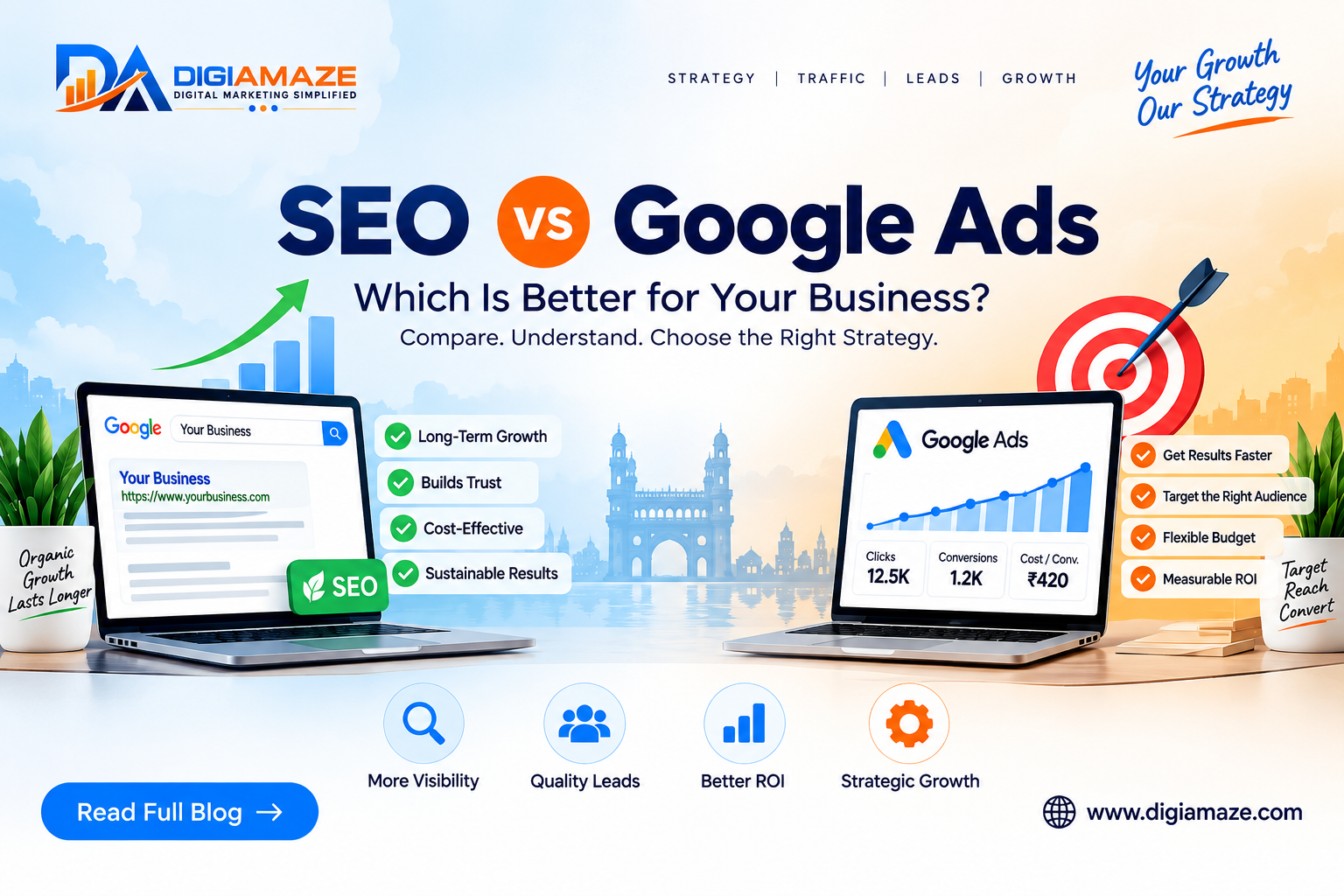
Choosing between SEO and Google Ads is a common challenge for businesses investing in digital marketing. Both strategies can help you increase website traffic, generate leads and grow your business, but they work in very different ways.
SEO focuses on improving your organic visibility in search engine results, while Google Ads allows you to pay for advertising placements and reach potential customers based on keywords, audiences and other targeting signals.
So, SEO vs Google Ads: which is better for your business?
The answer depends on your business goals, budget, competition, target audience and how quickly you need results. In many cases, businesses can use SEO and Google Ads together as part of a complete digital marketing strategy.
SEO vs Google Ads: Quick Comparison
| Factor | SEO | Google Ads |
|---|---|---|
| Traffic Type | Organic | Paid |
| Cost Model | Investment in SEO | Pay for advertising clicks/interactions |
| Speed | Usually takes time | Can generate visibility quickly after campaigns are approved |
| Long-Term Value | Can build lasting organic visibility | Traffic generally depends on active campaigns |
| Keyword Targeting | Yes | Yes |
| Local Search | Very useful | Very useful |
| Brand Building | Strong | Strong |
| Conversion Tracking | Yes | Yes |
| Budget Control | Indirect | Strong daily/monthly control |
| Best For | Long-term organic growth | Targeted traffic and faster campaign activation |
What Is SEO?
Search Engine Optimisation (SEO) is the process of improving a website so that search engines can better understand its content and users can discover it through organic search results.
SEO can include:
- Keyword research
- On-page SEO
- Technical SEO
- Content marketing
- Internal linking
- Local SEO
- Website optimisation
- Image optimisation
- Structured data
- Digital PR and link acquisition
For example, if you are a digital marketing consultant in Hyderabad and create a useful page targeting:
“Digital Marketing Consultant in Hyderabad”
you can optimise the page around the search intent, provide useful information and build your website’s topical authority.
Over time, this can help the page become eligible to appear in organic search results.
What Is Google Ads?
Google Ads is Google’s advertising platform that allows businesses to promote their products and services across Google’s advertising inventory.
Depending on the campaign type, businesses can reach potential customers through:
- Google Search
- YouTube
- Display advertising
- Google Maps and local surfaces
- Shopping
- Performance Max campaigns
For example, a business targeting:
“Google Ads Consultant in Hyderabad”
can create a relevant Google Ads campaign and potentially appear when users search for related services.
Google Ads can therefore be useful when a business wants to reach people with specific search intent without waiting for an organic page to gain visibility.
SEO vs Google Ads: How Quickly Do They Produce Results?
One of the biggest differences between SEO and Google Ads is time to visibility.
SEO
SEO is generally a long-term strategy.
A new website may need time to:
- Get discovered and indexed
- Build topical relevance
- Develop authority
- Earn links and mentions
- Improve rankings
- Generate consistent organic traffic
Results can vary significantly depending on the website, competition, content quality, technical condition and search queries being targeted.
Google Ads
Google Ads can provide paid visibility much faster once campaigns are properly set up and approved.
However, launching an advertising campaign does not automatically mean profitable results.
Performance depends on:
- Keyword selection
- Search intent
- Ad relevance
- Competition
- Bidding
- Landing page quality
- Conversion tracking
- Budget
- Offer
- Sales follow-up
SEO vs Google Ads: Which Is More Cost-Effective?
There is no universal answer.
With SEO, you invest in activities such as:
- Content creation
- Technical optimisation
- Keyword research
- Website development
- SEO tools
- Link acquisition
- Local SEO
You don’t normally pay Google for each organic click.
With Google Ads, you allocate an advertising budget and pay according to the campaign’s applicable advertising model.
Therefore, comparing SEO and Google Ads only by cost per click doesn’t provide a complete picture.
A better approach is to measure:
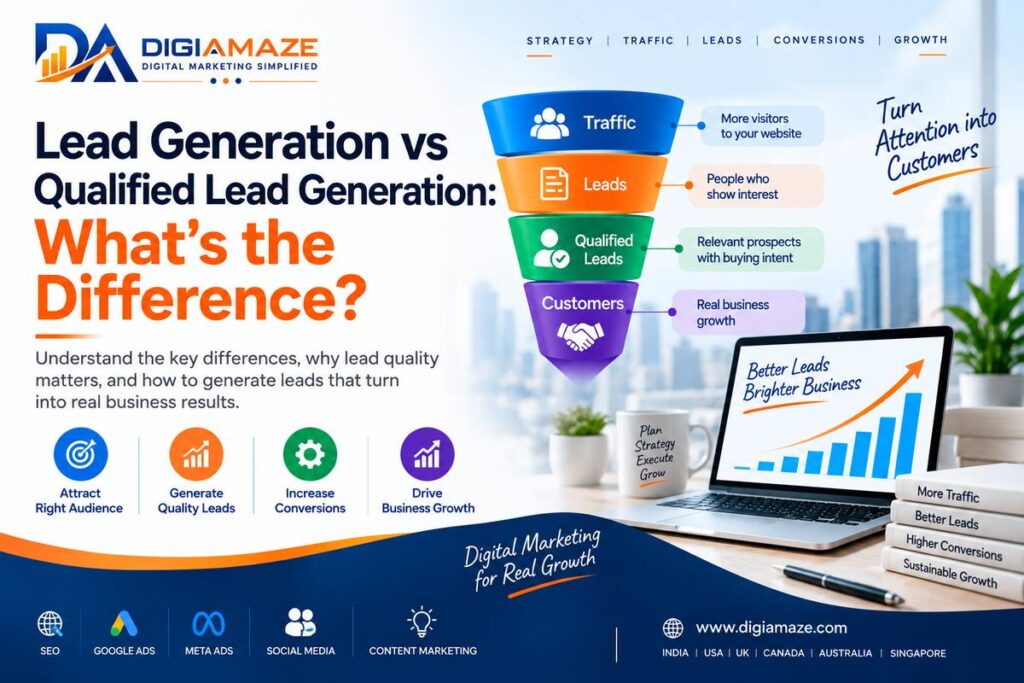
Marketing Cost → Leads → Qualified Leads → Customers → Revenue
SEO vs Google Ads for Small Businesses
Small businesses often have limited marketing budgets, so choosing the right channel is important.
SEO can be useful when:
- You want long-term organic traffic
- Customers regularly search for your services
- You want to build online authority
- You can invest consistently in content
- Local search is important
- You want to reduce dependence on paid traffic over time
Google Ads can be useful when:
- You need targeted traffic quickly
- Your customers have strong search intent
- You have a competitive offer
- You want measurable lead-generation campaigns
- You want to test specific keywords
- You have a defined advertising budget
For many small businesses, using SEO + Google Ads together can provide both short-term and long-term opportunities.
SEO vs Google Ads for Local Businesses
Local businesses can benefit from both strategies.
Imagine a business in Hyderabad offering a specific service.
A potential customer searches:
“best service provider near me”
or
“service provider in Hyderabad”
SEO can help your website and Google Business Profile gain organic/local visibility.
Google Ads can provide paid placements for relevant searches.
A local digital marketing strategy can therefore combine:
Local SEO + Google Business Profile + SEO + Google Ads + Reviews + Conversion Tracking
This creates multiple opportunities for customers to discover your business.
SEO vs Google Ads for Lead Generation
If your main objective is lead generation, Google Ads can provide a direct way to target relevant searches.
For example:
Keyword → Advertisement → Landing Page → Form/Call/WhatsApp → Lead
But the campaign should be measured beyond clicks.
Important metrics include:
- Click-through rate
- Cost per click
- Conversion rate
- Cost per conversion
- Qualified leads
- Customer acquisition cost
- Revenue
- Return on ad spend where applicable
SEO can use a similar conversion funnel:
Organic Search → Website → Landing Page → Enquiry → Lead → Customer
The key difference is how users reach the website.
Can SEO and Google Ads Work Together?
Yes.
In fact, using both can give businesses additional search visibility and useful performance data.
For example:
Google Ads
Use paid campaigns to test:
- Keywords
- Offers
- Landing pages
- Ad messages
- Customer search intent
SEO
Use the insights from your search data to develop:
- SEO landing pages
- Blog content
- Service pages
- FAQ content
- Local pages
This can create a connected search marketing strategy.
Using Google Ads Data to Improve SEO
Google Ads can provide useful information about search behaviour.
Suppose your Google Ads campaign shows that a particular keyword generates relevant enquiries.
You can consider creating or improving an organic page around the same topic.
For example:
Google Ads Keyword:Google Ads Management Cost in Hyderabad
You could develop an SEO article such as:
Google Ads Management Cost in Hyderabad 2026: Complete Pricing Guide
The paid campaign can help you understand search intent and conversion behaviour, while SEO works toward long-term organic visibility.
Using SEO Data to Improve Google Ads
SEO research can also support Google Ads.
Your SEO keyword research can identify:
- Commercial keywords
- Informational keywords
- Location-based searches
- Long-tail keywords
- Customer questions
- Search intent
These insights can help you structure more relevant advertising campaigns.
SEO vs Google Ads: Which One Should You Choose?
Instead of asking only:
“SEO or Google Ads?”
ask:
“What does my business need right now?”
Choose an SEO-focused strategy when:
Your goal is long-term organic visibility and you can invest consistently in website optimisation and content.
Consider Google Ads when:
You need targeted paid traffic and have a defined budget and measurable conversion goal.
Consider both when:
You want to build organic visibility while also using paid search to reach potential customers and generate immediate campaign traffic.
SEO vs Google Ads for E-Commerce Businesses
E-commerce businesses may benefit from a combination of organic and paid strategies.
SEO can help with:
- Product pages
- Category pages
- Buying guides
- Informational content
- Product-related searches
- Organic brand visibility
Google Ads can help with:
- Product advertising
- Search campaigns
- Performance Max
- Brand campaigns
- Remarketing
- Promotional campaigns
The exact mix should depend on product margins, customer acquisition cost, competition and conversion performance.
SEO vs Google Ads for B2B Businesses
B2B businesses often have longer customer journeys.
SEO can help potential customers discover educational content while researching a problem.
For example:
Search → Educational Article → Service Page → Lead Form → Sales Team
Google Ads can target high-intent commercial searches.
For B2B companies, combining:
SEO + Google Ads + LinkedIn + Content Marketing + CRM
can create a broader lead-generation system.
SEO vs Google Ads: Common Mistakes to Avoid
1. Expecting SEO Results Immediately
SEO generally requires consistent work and time.
2. Running Google Ads Without Conversion Tracking
Clicks alone don’t tell you whether campaigns are generating business.
3. Targeting Too Many Keywords
Focus on keywords relevant to your products, services and customers.
4. Ignoring Search Intent
A keyword may generate significant traffic but still produce poor-quality leads if the intent doesn’t match your offering.
5. Sending All Google Ads Traffic to the Homepage
Dedicated landing pages can provide a more relevant experience for specific campaigns.
6. Ignoring Mobile Users
Your website and landing pages should provide a good mobile experience.
How to Measure SEO Performance
Important SEO metrics include:
- Organic clicks
- Organic impressions
- Search rankings
- Organic conversions
- Organic traffic
- Indexed pages
- Engagement metrics
- Leads
- Revenue from organic traffic
Don’t judge SEO only by keyword rankings.
A keyword ranking is useful, but business conversions are more important.
How to Measure Google Ads Performance
For Google Ads, monitor metrics such as:
- Impressions
- Clicks
- CTR
- CPC
- Conversions
- Conversion rate
- Cost per conversion
- Search terms
- Impression share
- Conversion value
- ROAS, where appropriate
Your measurement setup should accurately distinguish meaningful business conversions from low-value interactions.
SEO vs Google Ads for Hyderabad Businesses
For businesses operating in Hyderabad, location can be an important part of your search strategy.
You may target relevant searches such as:
- Digital Marketing Consultant in Hyderabad
- SEO Consultant in Hyderabad
- Google Ads Consultant Hyderabad
- Digital Marketing Agency Hyderabad
- SEO Services Hyderabad
- Google Ads Management Hyderabad
- Local SEO Services Hyderabad
Your strategy should be based on your actual service area and customer demand rather than simply creating pages for every possible location.
SEO vs Google Ads: A Practical Strategy for 2026
A balanced search marketing plan can look like this:
Phase 1 — Build the Foundation
- Professional website
- Google Business Profile
- Conversion tracking
- Google Analytics 4
- Google Tag Manager
- Search Console
Phase 2 — Build Organic Visibility
- Keyword research
- Service pages
- Local SEO
- Helpful blog content
- Technical SEO
- Internal linking
Phase 3 — Generate Targeted Traffic
- Google Ads
- High-intent keywords
- Dedicated landing pages
- Conversion tracking
- Negative keyword management
Phase 4 — Optimise
Review:
Traffic → Leads → Qualified Leads → Customers → Revenue
Then allocate your marketing resources based on measured business performance.
SEO and Google Ads: A Combined Digital Marketing Strategy
SEO and Google Ads should not necessarily be treated as competing strategies.
They can serve different roles within the same marketing plan.
SEO: Build organic visibility and long-term search presence.
Google Ads: Reach targeted users through paid advertising.
Content Marketing: Answer customer questions and build topical relevance.
Local SEO: Reach customers searching within your service area.
Conversion Optimisation: Turn website visitors into enquiries and customers.
Together, these activities can create a more complete digital marketing strategy.
Digital Marketing Consultant in Hyderabad, India
Kotla Ranjith Kumar Reddy is a Digital Marketing Consultant in Hyderabad, India, working across SEO, Google Ads, Meta Ads, Local SEO, Google Business Profile optimisation, lead generation, performance marketing, AI marketing and marketing automation.
For businesses deciding between SEO vs Google Ads, the right strategy should be based on business objectives, customer search behaviour, competition, budget, conversion data and the expected customer lifetime value.
A data-driven approach can help businesses decide how much to invest in organic search, paid advertising or both.
Frequently Asked Questions
Is SEO better than Google Ads?
SEO and Google Ads serve different purposes. SEO focuses on organic visibility, while Google Ads provides paid advertising opportunities. Which approach is appropriate depends on your business goals, budget and timeline.
Is Google Ads better than SEO?
Google Ads can be useful for businesses seeking targeted paid traffic, while SEO can support long-term organic visibility. They should be evaluated based on business outcomes rather than simply traffic volume.
Can I use SEO and Google Ads together?
Yes. Many businesses use Google Ads for paid search traffic while simultaneously investing in SEO to build organic visibility.
Which is cheaper: SEO or Google Ads?
There is no universal answer. SEO involves investment in optimisation and content, while Google Ads involves an advertising budget. Compare both based on leads, customers and revenue rather than cost alone.
How long does SEO take to work?
SEO timelines vary depending on competition, website history, technical condition, content quality and other factors. New websites often need time to establish organic visibility.
Can Google Ads help SEO?
Google Ads does not directly purchase organic rankings. However, advertising data can provide useful insights into keywords, search intent, offers and landing-page performance that can inform SEO strategy.
Should small businesses in Hyderabad use SEO or Google Ads?
The appropriate choice depends on the business. A small business seeking long-term organic visibility may prioritise SEO, while a business seeking targeted paid traffic may use Google Ads. Many businesses can use both.
Conclusion
The SEO vs Google Ads debate does not have one universal answer.
SEO can help build long-term organic search visibility, authority and sustainable traffic. Google Ads can help businesses reach targeted audiences through paid advertising and measure campaign performance.
For many businesses, the most practical approach is not choosing one and ignoring the other.
Instead, build a strategy around:
SEO + Google Ads + Local SEO + Content + Conversion Tracking + Lead Follow-Up
The goal should always be the same: attract the right audience, generate qualified leads and convert those opportunities into measurable business growth.