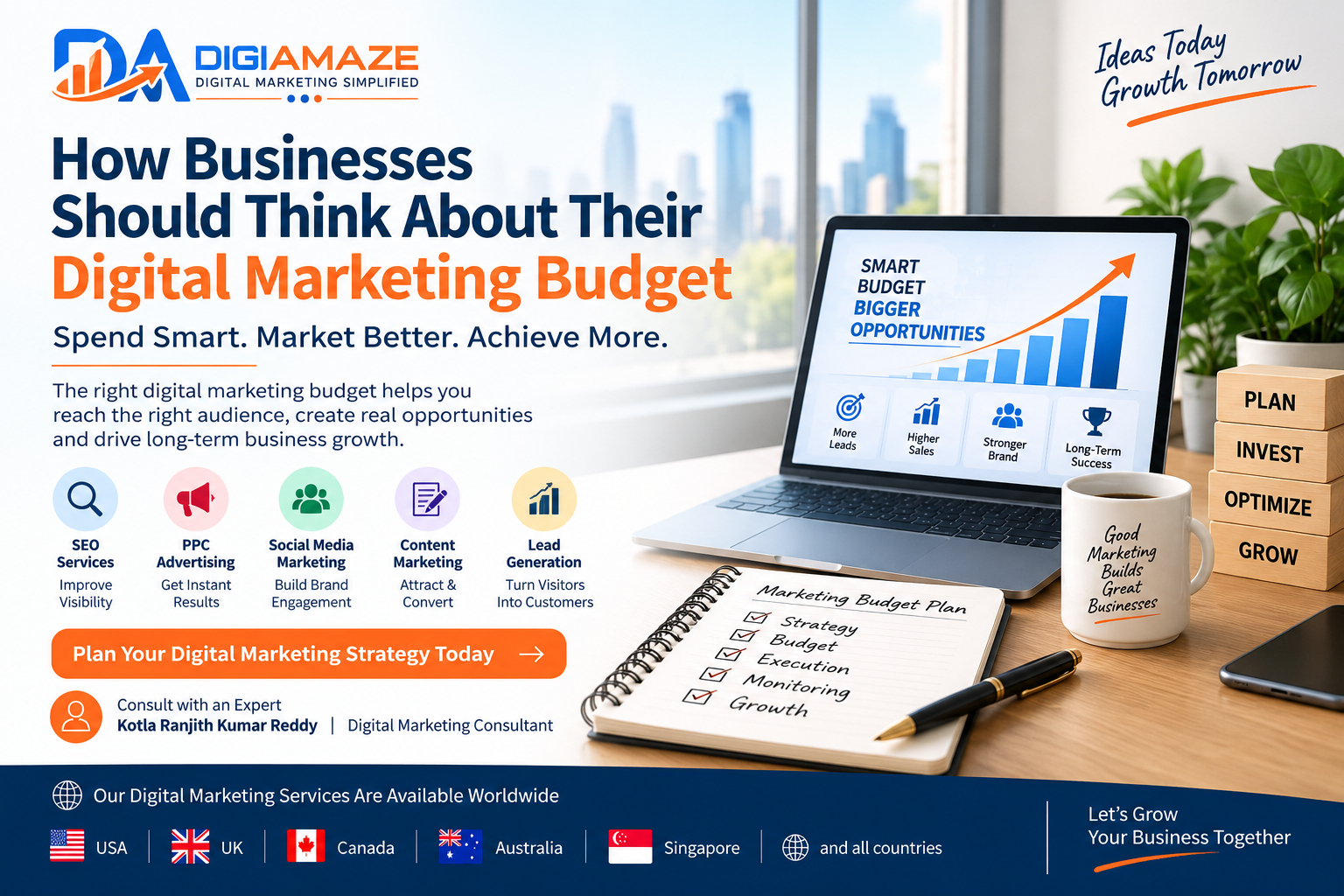
How Businesses Should Think About Their Digital Marketing Budget
In today’s competitive online market, having a clear digital marketing budget is important for businesses of every size. Whether you are a startup, small business, growing company, or established brand, investing in digital marketing can help you reach the right audience, generate leads, increase sales, and build long-term brand visibility.
However, digital marketing is not simply about spending more money. The key is to spend your budget strategically and focus on activities that support your business goals.
A well-planned digital marketing strategy helps businesses understand where their money should be invested, which marketing channels are delivering results, and where improvements are required.
What Is a Digital Marketing Budget?
A digital marketing budget is the amount a business plans to invest in online marketing activities over a specific period. This may include monthly, quarterly, or annual spending on different digital marketing channels.
Depending on your business objectives, your budget may be allocated to:
- Search Engine Optimization (SEO)
- Google Ads and PPC advertising
- Social media marketing
- Content marketing
- Website optimization
- Lead generation
- Email marketing
- Online reputation management
- Conversion rate optimization
- Marketing analytics and reporting
There is no fixed digital marketing budget that works for every business. The right amount depends on your industry, competition, target audience, business goals, location, and expected return on investment.
Start With Your Business Goals
Before deciding how much to spend, businesses should clearly define what they want to achieve.
For example, one company may want to increase website traffic through SEO, while another may need immediate leads through Google Ads. An e-commerce business may focus on online sales, whereas a local business may want more phone calls, enquiries, or store visits.
Your marketing goals could include:
- Increasing website traffic
- Generating qualified leads
- Increasing online sales
- Improving search engine rankings
- Building brand awareness
- Growing social media engagement
- Reducing cost per lead
- Increasing customer conversions
Once your goals are clear, it becomes easier to decide which digital marketing services deserve more investment.
Invest in SEO for Long-Term Growth
SEO services can be an important part of a long-term digital marketing strategy. Search engine optimization helps businesses improve their visibility in search results and attract users who are actively searching for their products or services.
SEO may include keyword research, technical SEO, on-page optimization, content creation, internal linking, local SEO, and authority building.
Unlike paid advertising, SEO generally requires time and consistent effort to produce sustainable results. Businesses should therefore consider SEO as a long-term investment rather than expecting immediate results.
A strong SEO strategy can help generate organic traffic and reduce dependence on paid advertising over time.
Use PPC Advertising for Faster Results
PPC advertising, including Google Ads, can help businesses reach potential customers quickly. Paid search campaigns allow businesses to target users based on relevant keywords, locations, audiences, and other targeting options.
PPC can be particularly useful when a business wants immediate visibility, lead generation, product sales, or traffic to a specific landing page.
However, simply increasing your advertising budget does not always guarantee better results. Campaign structure, keyword selection, ad copy, landing page experience, audience targeting, and conversion tracking all play an important role.
Businesses should regularly review metrics such as clicks, conversions, cost per conversion, and return on ad spend to optimize their PPC budget.
Don’t Ignore Social Media Marketing
Social media marketing can help businesses build awareness, engage with customers, and promote their products and services.
Platforms such as Facebook, Instagram, LinkedIn, and other social channels can be used depending on where your target audience spends time online.
Your social media budget may include content creation, paid advertising, creative development, audience targeting, and campaign management.
The right platform depends on your business and audience. Instead of trying to be active everywhere, businesses should focus on the channels that are most relevant to their customers.
Website Optimization Is Part of Your Marketing Budget
Driving visitors to your website is only part of digital marketing. Your website also needs to convert those visitors into enquiries, leads, or customers.
A slow website, confusing navigation, poor mobile experience, unclear messaging, or complicated enquiry process can reduce conversions even when your marketing campaigns are performing well.
Therefore, businesses should consider website optimization and conversion rate optimization when planning their digital marketing budget.
Improving landing pages, calls-to-action, forms, website speed, mobile usability, and content can help businesses get more value from their existing traffic.
Measure Your Digital Marketing ROI
One of the most important aspects of managing a digital marketing budget is measurement.
Businesses should not only look at website traffic or social media followers. They should also understand whether marketing activities are contributing to actual business results.
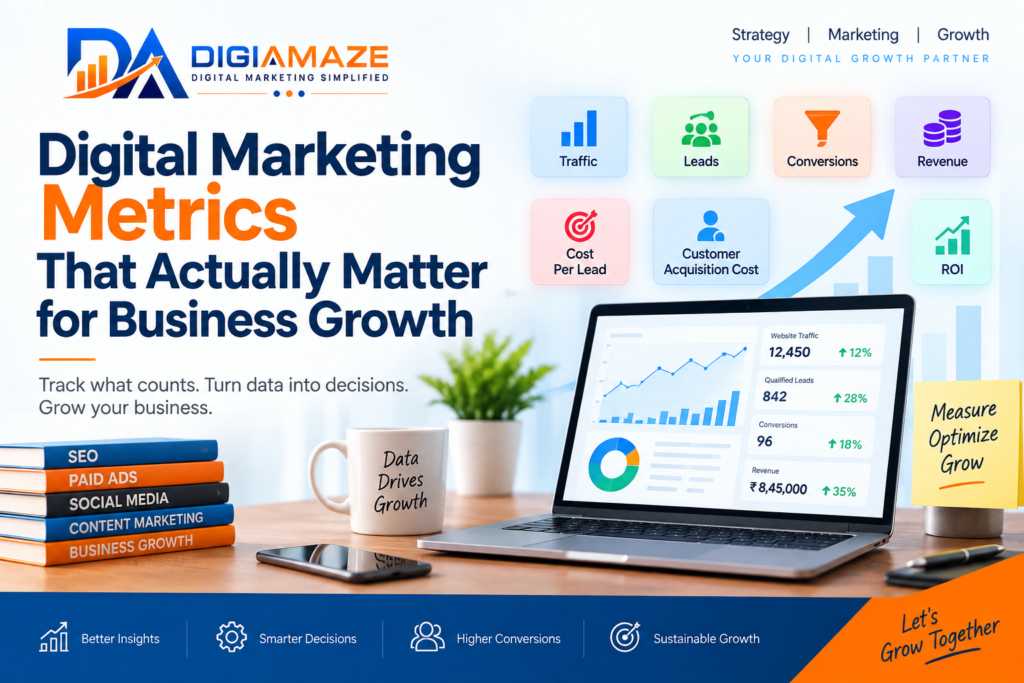
Important digital marketing metrics can include:
- Website traffic
- Organic clicks and impressions
- Keyword rankings
- Leads generated
- Conversion rate
- Cost per lead
- Customer acquisition cost
- PPC conversion rate
- Return on ad spend
- Overall marketing ROI
Tracking these metrics helps businesses identify which campaigns are working and where the budget should be adjusted.
Should Businesses Increase Their Digital Marketing Budget?
A business should consider increasing its digital marketing budget when campaigns are consistently generating profitable results and there is an opportunity to scale.
For example, if an SEO campaign is generating qualified organic leads or a PPC campaign is producing customers at an acceptable acquisition cost, increasing investment may help the business reach more potential customers.
However, businesses should avoid increasing budgets simply because competitors are spending more. The focus should always remain on profitability, customer acquisition, and measurable business outcomes.
Work With a Digital Marketing Consultant
Managing multiple digital marketing channels can be challenging, particularly for businesses that do not have an experienced internal marketing team.
A digital marketing consultant can help businesses understand their current online performance, identify opportunities, develop a marketing strategy, allocate budgets, and measure campaign performance.
Kotla Ranjith Kumar Reddy – Digital Marketing Consultant provides digital marketing consulting and services designed to help businesses strengthen their online presence and achieve measurable marketing objectives.
The services include:
- SEO services
- PPC and Google Ads
- Social media marketing
- Content marketing
- Lead generation
- Website optimization
- Conversion optimization
- Digital marketing strategy
- Online marketing consulting
These digital marketing services are available to businesses across the USA, UK, Canada, Australia, Singapore, and other international markets.
Create a Budget That Supports Business Growth
Every business has different marketing requirements. A startup may need to focus on brand awareness and lead generation, while an established company may prioritize SEO growth, paid advertising, customer acquisition, and conversion optimization.
The most effective approach is to create a flexible digital marketing budget based on your business goals and continuously review performance.
Start with clear objectives, choose the right marketing channels, track meaningful metrics, and optimize your spending based on results.
Digital marketing works best when it is treated as an ongoing growth strategy rather than a one-time activity. With the right planning, execution, measurement, and optimization, businesses can make their marketing budget work harder and build a stronger online presence.
If you are planning to improve your online visibility, generate more leads, or develop a better digital marketing strategy, working with an experienced Digital Marketing Consultant can help you identify the right opportunities and make informed marketing decisions.