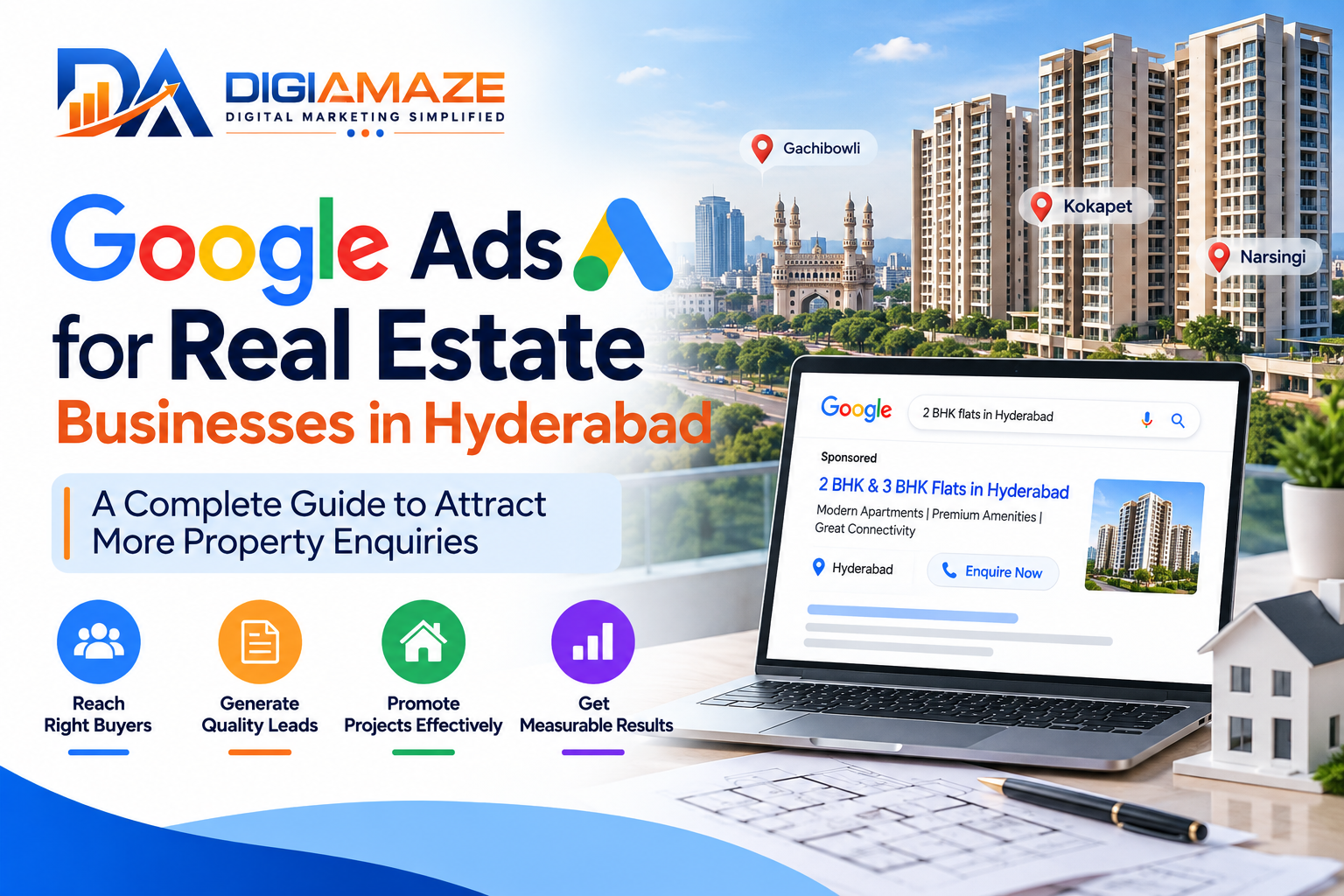
Google Ads for Real Estate Businesses in Hyderabad: A Complete Lead Generation Guide
Hyderabad’s real estate market offers opportunities for property developers, builders, real estate agents, and property consultants. With residential apartments, luxury villas, gated communities, open plots, and commercial properties competing for attention, reaching the right potential buyers has become an important part of property marketing.
Many people begin their property search online. They compare locations, explore property prices, search for nearby amenities, and enquire about projects before scheduling a site visit. This makes digital advertising an important channel for real estate businesses looking to connect with prospective buyers.
Google Ads for real estate businesses in Hyderabad can help property brands reach people actively searching for properties, projects, and real estate services. However, generating meaningful enquiries requires more than launching an advertising campaign. It involves choosing the right keywords, targeting relevant locations, creating effective ads, optimizing landing pages, and measuring lead quality.
In this guide, we will explore how real estate businesses in Hyderabad can build a more structured Google Ads lead generation strategy.
1. Why Google Ads Is Important for Real Estate Businesses in Hyderabad
Real estate is a high-consideration purchase. Potential buyers may spend weeks or months researching properties before making a decision. They often search for specific property types, locations, budgets, and amenities.
Google Ads allows advertisers to reach people when they search for relevant information on Google.
For example, depending on the property being marketed, potential customers might search for:
- 2 BHK flats for sale in Hyderabad
- Luxury apartments in Hyderabad
- Villas for sale near Hyderabad
- Residential plots in Hyderabad
- Commercial property for sale in Hyderabad
- New residential projects in Hyderabad
- Real estate agents in Hyderabad
These searches can indicate different levels of purchase intent. A person searching for available flats may be closer to making an enquiry than someone searching for general information about property investment.
A well-planned campaign can help businesses connect their advertising with the searches most relevant to their projects.
2. Define Your Real Estate Advertising Goals
Before creating a Google Ads campaign, determine what you want to achieve.
Your campaign objective should reflect the property type, sales process, and business priorities.
Common real estate advertising goals include:
- Generating enquiries for residential apartments.
- Promoting new property launches.
- Increasing enquiries for villas and gated communities.
- Generating leads for residential plots.
- Promoting commercial properties.
- Encouraging prospective buyers to schedule site visits.
- Increasing qualified enquiries for specific projects.
Avoid treating every enquiry as an equally valuable lead. A campaign that generates a high volume of enquiries may still perform poorly if the leads are irrelevant, outside the target budget, or unsuitable for the property.
Define what a qualified lead means for your business before measuring campaign performance.
3. Choose the Right Google Ads Campaign Type
Different campaign types serve different purposes. Select the format based on your objectives, available creative assets, audience intent, and conversion tracking setup.
Google Search Ads
Search campaigns can help you reach people actively looking for properties or real estate services.
For example, an apartment developer might target relevant searches related to apartments for sale in a specific Hyderabad locality.
Search campaigns are often a useful starting point when the objective is to generate enquiries from people expressing clear search intent.
Google Display Ads
Display campaigns can show visual advertisements across eligible websites and apps. They may support property awareness and reach, depending on the campaign setup and available targeting options.
Use clear property imagery, accurate information, and a landing page relevant to the advertised project.
YouTube Advertising
Video campaigns can introduce a project, showcase amenities, explain the location, and provide a visual overview of a property.
They can support awareness and consideration, particularly when you have quality project videos or virtual tours.
Performance Max Campaigns
Performance Max can distribute eligible ads across Google’s advertising channels using campaign assets, audience signals, and conversion goals.
Before using it, ensure your conversion actions are configured correctly and that the campaign has suitable assets and meaningful performance data.
For many real estate advertisers, starting with a clearly structured Search campaign can make it easier to understand which searches generate relevant enquiries. Other campaign types can be tested as part of a broader strategy.
4. Target the Right Locations in Hyderabad
Location targeting is especially important for real estate advertising because property buyers often have preferences related to commuting, employment, schools, transport, and nearby facilities.
Depending on the project, advertisers may consider searches related to localities such as:
- Gachibowli
- Kokapet
- Narsingi
- Tellapur
- Kondapur
- Miyapur
- Bachupally
- Kompally
- Uppal
- LB Nagar
These are examples, not a recommendation to target every locality. Select locations based on the actual project location, likely buyer demand, service area, and business objectives.
For example, a residential project in Kokapet may benefit from advertising focused on relevant searches around Kokapet and nearby areas. A project in Kompally may require a different keyword and geographic strategy.
Review Google’s location targeting settings carefully. Understand the difference between people physically present in a targeted area and people showing interest in that area, according to the options available in your account.
Important: Follow Google’s current housing and personalized advertising policies. Do not use prohibited targeting methods or discriminatory criteria when promoting housing opportunities.
5. Research High-Intent Real Estate Keywords
Keyword research helps connect your campaign with relevant property searches.
Instead of targeting only broad terms such as “real estate” or “properties,” organize keywords by property category, location, and intent.
| Property category | Example keyword ideas |
|---|---|
| Apartments | Flats for sale in Hyderabad |
| Luxury properties | Luxury apartments in Hyderabad |
| Villas | Villas for sale in Hyderabad |
| Residential plots | Residential plots in Hyderabad |
| New projects | New residential projects in Hyderabad |
| Local property searches | Apartments for sale in Kokapet |
| Commercial property | Commercial property for sale in Hyderabad |
These are starting points for research, not a guarantee of search volume or performance.
Use Google’s Keyword Planner and your campaign’s search terms report to identify relevant search queries.
Use Negative Keywords
Negative keywords can help reduce irrelevant traffic.
Depending on the campaign, you may need to exclude searches related to:
- Jobs and careers.
- Property rental, if you only sell properties.
- Free property listings.
- Construction jobs or unrelated services.
- Property-related educational information that does not match your offer.
Review negative keywords carefully. A term that appears irrelevant for one project may be useful for another.
6. Write Compelling and Accurate Google Ads
Your ad should communicate the property’s genuine selling points and encourage the right audience to learn more.
Useful elements may include:
- Property type.
- Project location.
- Available configurations, when verified.
- Genuine amenities.
- Approved project details, where applicable.
- A relevant call to action.
For example, a compliant and factual ad might use a headline such as:
Explore Apartments in Kokapet
Possible supporting headlines include:
- Discover Project Amenities
- View Available Configurations
- Enquire About the Project
Use descriptions to explain what prospective buyers can learn from the landing page.
Avoid unsupported claims such as guaranteed appreciation, assured investment returns, misleading discounts, or unverified possession dates. Property prices, availability, specifications, and promotional offers should be accurate and updated.
For applicable projects, ensure that advertising and landing-page information is consistent with relevant RERA requirements and the project’s registration status.
7. Build a Landing Page That Converts Visitors into Enquiries
Sending every advertisement to a generic homepage can make it harder for prospective buyers to find the information they need.
Create a dedicated landing page for each important project or property category where practical.
A strong real estate landing page should include:
Project overview: Explain what the property offers and who it may suit.
Location details: Provide accurate location information and relevant connectivity details.
Property specifications: Display verified configurations, amenities, and other essential information.
Images and videos: Use genuine project photographs, walkthroughs, or virtual tours where available.
Enquiry form: Ask for the minimum information needed to respond to the enquiry.
Contact options: Provide clear ways to request a callback or arrange a site visit.
Trust and compliance information: Include relevant developer details, disclosures, and RERA information where applicable.
Make sure the landing page works well on mobile devices and loads quickly. Test enquiry forms and phone links before launching campaigns.
The messaging on the landing page should match the advertisement so that visitors can easily understand the property being promoted.
8. Track Leads and Measure Conversion Quality
Accurate conversion tracking helps you understand whether Google Ads is contributing to business results.
Useful actions to measure may include:
- Completed enquiry forms.
- Calls from advertisements or the website, where tracking is appropriately configured.
- Site visit requests.
- Qualified leads recorded in a CRM.
- Other meaningful actions in the sales process.
Do not rely only on impressions, clicks, or click-through rate to determine success.
Connect campaign reporting with your lead management process where possible. This can help the sales team record which enquiries are relevant, which leads receive follow-up, and which progress to site visits.
Use privacy-conscious measurement and avoid uploading sensitive personal information without an appropriate legal basis and compliance with applicable platform policies.
Key Google Ads Metrics for Real Estate
| Metric | What it tells you |
|---|---|
| Click-through rate (CTR) | How often people click after seeing your ad |
| Average CPC | The average cost per click |
| Conversion rate | The proportion of measured visits that result in a conversion |
| Cost per lead | Advertising spend divided by the number of defined leads |
| Qualified lead rate | The share of leads that meet your qualification criteria |
| Site visit rate | The proportion of leads that progress to a site visit |
| Cost per qualified lead | Advertising spend relative to qualified leads |
For example, if a campaign spends ₹30,000 and generates 100 leads, the cost per lead is ₹300. However, if only 20 leads are qualified, the advertising cost per qualified lead is ₹1,500.
This illustrates why lead quality should be evaluated alongside lead volume.
9. Improve Lead Quality Through Sales Follow-Up
Google Ads is only one part of the real estate lead generation process. The way enquiries are handled also influences business outcomes.
Consider implementing a consistent lead management process:
- Record enquiries in a CRM or organized lead management system.
- Assign leads to the appropriate sales representative.
- Respond promptly during business hours.
- Record enquiry status and follow-up activity.
- Identify common reasons for unqualified leads.
- Share aggregated lead-quality insights with the marketing team.
If campaigns generate many enquiries but few site visits, investigate the cause before increasing the budget. The issue could involve keyword relevance, property information, enquiry handling, availability, pricing expectations, or other factors.
Use this feedback to refine the campaign and improve the experience for prospective buyers.
10. Optimize Your Google Ads Campaign Regularly
Successful campaign management requires continuous evaluation.
Review search terms, keyword performance, location results, device performance, landing-page conversion rates, and lead quality.
Test different ad messages where appropriate. Compare campaign results using consistent conversion definitions and enough data to make a meaningful assessment.
Review budget allocation based on business priorities and reliable performance data rather than making frequent changes in response to short-term fluctuations.
Also review Google’s current advertising policies and applicable real estate regulations. Requirements may change, and compliance should be part of ongoing campaign management.
Common Google Ads Mistakes in Real Estate
Real estate businesses can waste advertising spend when campaigns are not structured carefully.
Avoid these common mistakes:
- Targeting broad keywords without evaluating intent.
- Sending all visitors to the same generic page.
- Using unverified property claims or outdated prices.
- Failing to track enquiries accurately.
- Ignoring negative keywords and search terms.
- Measuring success only by the total number of leads.
- Neglecting sales follow-up.
- Using targeting methods that violate housing advertising policies.
- Increasing budgets before understanding lead quality.
A well-managed campaign should connect relevant searches with accurate property information and a clear next step.
Conclusion: Build a Smarter Real Estate Lead Generation Strategy
Google Ads can help real estate businesses in Hyderabad connect with people actively searching for apartments, villas, residential plots, commercial properties, and new projects.
However, campaign success depends on the entire process—from keyword selection and location targeting to landing-page quality, conversion tracking, lead qualification, and sales follow-up.
Rather than focusing only on generating more enquiries, build a strategy that helps your business attract relevant prospects and understand which campaigns contribute to meaningful outcomes.
Start with clear objectives, accurate project information, carefully selected keywords, and reliable measurement. Then use performance data to improve the campaign over time.
About the Author
Kotla Ranjith Kumar Reddy is a Digital Marketing Consultant in Hyderabad, India, specializing in digital marketing strategy, Google Ads, SEO, performance marketing, and lead generation.
Through DigiAmaze, he shares practical digital marketing insights to help businesses improve their online visibility, attract relevant enquiries, and make informed marketing decisions.
🌐 Website: https://www.digiamaze.com/
Disclaimer: This article is for general marketing education and does not guarantee advertising results. Advertisers should verify current Google Ads policies, applicable housing advertising restrictions, and relevant real estate regulations before launching campaigns.